
How she helps · Kharghar
Learning disability
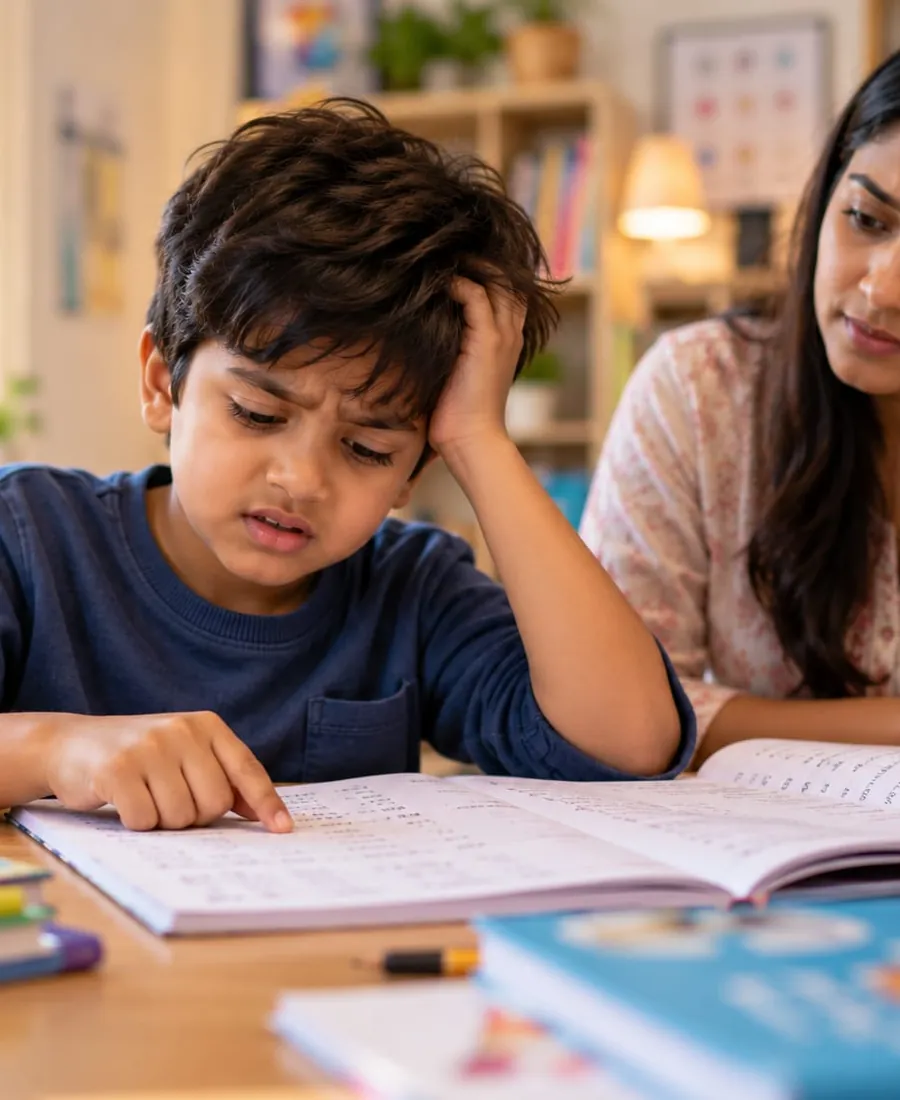
A learning disability means one part of learning is much harder for your child than the rest: reading (dyslexia), writing (dysgraphia) or maths (dyscalculia).
It is not laziness, and your child is not slow. With the right help, children catch up and feel confident again.
Signs
Signs parents often notice
- Poor handwriting
- Reading and writing trouble
- Problems with maths
- Poor coordination
- Hard to stay organised
- Holds the pencil too tight or too loose
- Mixes up letters like b and d
- Tears or anger at homework time
Every child is different. Your child may show some of these and not others. Only an assessment can tell.
How therapy helps
What you work on together
Goals are set with you after the first assessment. These are the ones families often choose.
Better pencil grip and handwriting
Hand-strength games and writing practice, so writing gets neater and less tiring.
Reading, writing and maths
Remedial education breaks each skill into small steps your child can manage.
Staying organised
Simple routines for the school bag, homework and time.
Focus in class
Movement breaks and Brain Gym exercises help your child settle and pay attention.
Confidence
Small wins, noticed and praised, so your child stops feeling "bad at school".
Your first visit
What to expect
Say hello
Send a WhatsApp message or call. Pick a time that suits you.
First assessment
Dr. Bhamini watches your child play and move, and talks with you about home and school. Bring any school or medical reports you have.
Goals and play
You agree clear goals as a team. Sessions are play-based, with simple activities to do at home.
The 11 therapies she uses
- Play-based therapy
- Sensory integration therapy
- Remedial education
- Cognitive behavioural therapy (CBT)
- Applied behaviour analysis (ABA)
- ADL training
- Brain Gym
- Mindfulness-based therapy
- Virtual reality training
- Group therapy
- Counselling
The same 11 therapies are used for every concern. She chooses what fits your child.
Questions
Parents often ask
Is my child just lazy?
Usually not. Many children who seem lazy are working very hard at something their brain finds difficult. An assessment shows what is really going on.
Should we bring school work?
Yes. Please bring notebooks, school reports and any earlier assessments. They help Dr. Bhamini see where your child is struggling.
Do we need a diagnosis first?
No. If you're worried, book an assessment and ask. Many families are also sent by their paediatrician or school.
What does it cost?
The first visit (assessment) is ₹1,200. Follow-up sessions are ₹1,000 each.
Worried about your child?
Send a WhatsApp message. Dr. Bhamini will tell you honestly what she sees, and how therapy can help.
Other concerns
She also helps with


Visit
Find the clinic
Closed Sunday