
How she helps · Kharghar
Feeding difficulties
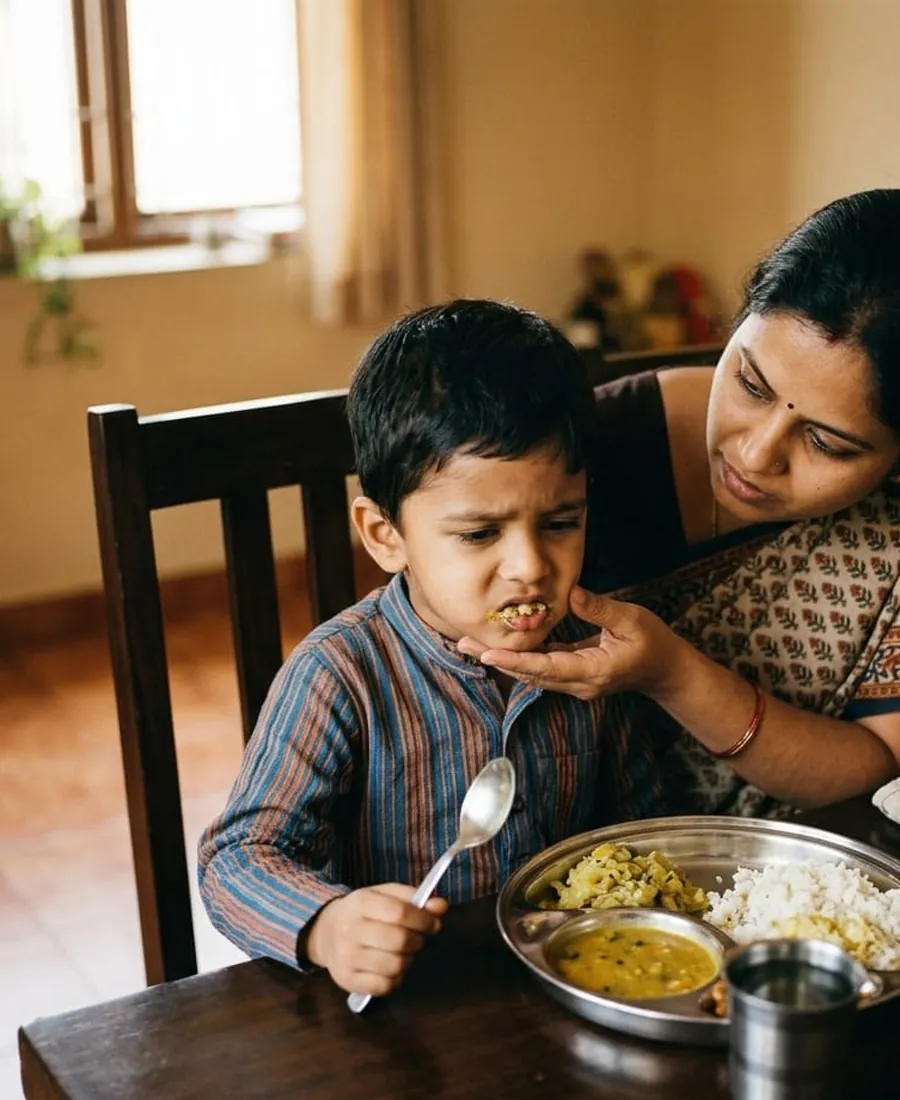
Some children eat only a few foods, refuse new tastes, or find chewing and swallowing hard. Mealtimes become a daily fight.
Feeding therapy makes eating calmer and easier, one small step at a time.
Signs
Signs parents often notice
- Refusing food or drink
- Very long mealtimes
- Sucking, swallowing or chewing trouble
- Eats only a few foods
- Gags on new textures
- Still needs mashed food when older
Every child is different. Your child may show some of these and not others. Only an assessment can tell.
How therapy helps
What you work on together
Goals are set with you after the first assessment. These are the ones families often choose.
Trying new foods
Play with food, step by step, so new tastes feel less scary.
Chewing and swallowing
Mouth and jaw exercises that make eating easier.
Eating on their own
Holding a spoon or cup, and feeding themselves.
Calmer mealtimes
Routines and seating that help your child sit and eat.
Help for parents
What to try at home, and what to avoid.
See your paediatrician first if your child chokes often, coughs or struggles to breathe while eating, or is losing weight.
Your first visit
What to expect
Say hello
Send a WhatsApp message or call. Pick a time that suits you.
First assessment
Dr. Bhamini watches your child play and move, and talks with you about home and school. Bring any school or medical reports you have.
Goals and play
You agree clear goals as a team. Sessions are play-based, with simple activities to do at home.
The 11 therapies she uses
- Play-based therapy
- Sensory integration therapy
- Remedial education
- Cognitive behavioural therapy (CBT)
- Applied behaviour analysis (ABA)
- ADL training
- Brain Gym
- Mindfulness-based therapy
- Virtual reality training
- Group therapy
- Counselling
The same 11 therapies are used for every concern. She chooses what fits your child.
Questions
Parents often ask
Is it just fussy eating?
Sometimes. But if mealtimes are a daily fight, or your child eats very few foods, an assessment is worth it.
Should we force our child to eat?
No. Forcing often makes it worse. Therapy shows you calm ways to help your child try new foods.
Do we need a diagnosis first?
No. If you're worried, book an assessment and ask. Many families are also sent by their paediatrician or school.
What does it cost?
The first visit (assessment) is ₹1,200. Follow-up sessions are ₹1,000 each.
Worried about your child?
Send a WhatsApp message. Dr. Bhamini will tell you honestly what she sees, and how therapy can help.
Other concerns
She also helps with



Visit
Find the clinic
Closed Sunday