How she helps · Kharghar
Cerebral palsy
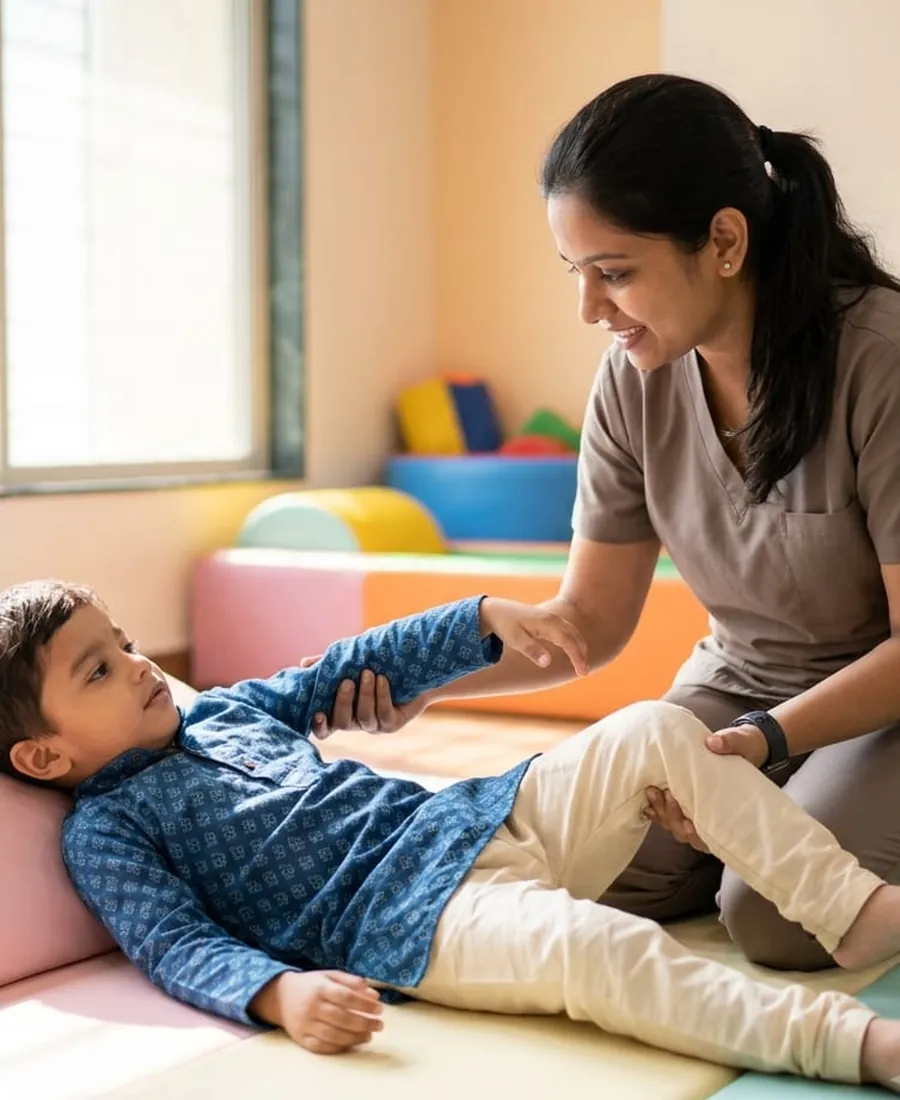
Cerebral palsy affects how a child moves and controls their muscles. It is caused by changes in the brain before, during or soon after birth.
Occupational therapy helps your child use their hands and body as well as they can in daily life.
Signs
Signs parents often notice
- Late rolling, sitting or walking
- Floppy hands
- Stiff hands and legs
- Uses one hand much more than the other
- Finds it hard to hold toys
- Unusual posture when sitting
Every child is different. Your child may show some of these and not others. Only an assessment can tell.
How therapy helps
What you work on together
Goals are set with you after the first assessment. These are the ones families often choose.
Using the hands
Reaching, holding and letting go, for play, eating and writing.
Sitting and posture
Better balance and support, so your child can sit, play and learn.
Everyday skills
Eating, dressing and washing, with the right help or tools.
Play and learning
Play that builds movement, attention and confidence.
Help for parents
How to hold, position and help your child at home.
Therapy works alongside your child's doctor and physiotherapist.
Your first visit
What to expect
Say hello
Send a WhatsApp message or call. Pick a time that suits you.
First assessment
Dr. Bhamini watches your child play and move, and talks with you about home and school. Bring any school or medical reports you have.
Goals and play
You agree clear goals as a team. Sessions are play-based, with simple activities to do at home.
The 11 therapies she uses
- Play-based therapy
- Sensory integration therapy
- Remedial education
- Cognitive behavioural therapy (CBT)
- Applied behaviour analysis (ABA)
- ADL training
- Brain Gym
- Mindfulness-based therapy
- Virtual reality training
- Group therapy
- Counselling
The same 11 therapies are used for every concern. She chooses what fits your child.
Questions
Parents often ask
Can therapy cure cerebral palsy?
No. Cerebral palsy does not go away. Therapy helps your child do as much as possible and makes daily life easier.
Will I learn how to help at home?
Yes. You learn how to hold, position and play with your child, so practice keeps going every day.
Do we need a diagnosis first?
No. If you're worried, book an assessment and ask. Many families are also sent by their paediatrician or school.
What does it cost?
The first visit (assessment) is ₹1,200. Follow-up sessions are ₹1,000 each.
Worried about your child?
Send a WhatsApp message. Dr. Bhamini will tell you honestly what she sees, and how therapy can help.
Other concerns
She also helps with
Visit
Find the clinic
Closed Sunday